
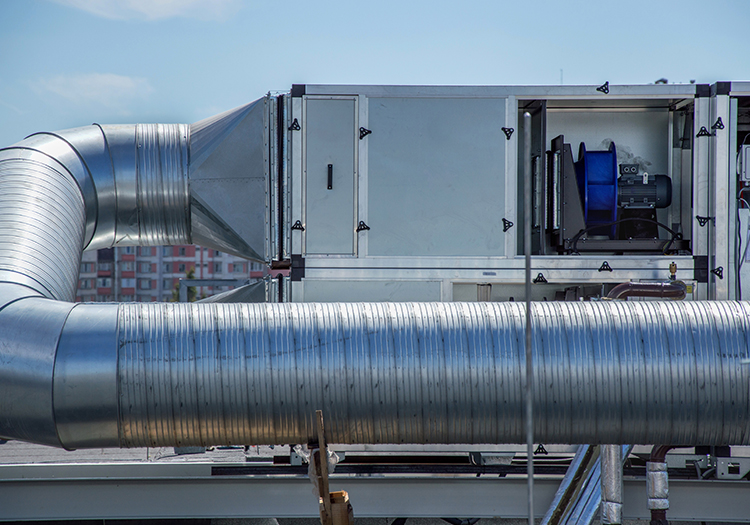
What is an Air Handling Unit & What Does it Do?
In the realm of building design and M&E (Mechanical & Electrical) Engineering, controlling air quality and temperature is absolutely crucial. One of the most essential components in achieving this is the Air Handling Unit (AHU). But what exactly is an Air Handling Unit, and what role does it play in modern buildings? This article will explore the importance of AHUs, their function, and their application in M&E engineering.
Understanding Air Handling Units (AHUs)
To begin with, an Air Handling Unit (AHU) is a key component of a Heating, Ventilation, and Air Conditioning (HVAC) system. Its primary function is to regulate and circulate air as part of the building’s ventilation system. Typically, AHUs serve commercial, healthcare, retail and industrial buildings where maintaining indoor air quality, temperature, and humidity is essential.
AHUs consist of various components such as fans, filters, heating and cooling coils, and sometimes humidifiers or dehumidifiers. These elements work together to ensure that fresh air enters the building, is conditioned to the desired temperature, and is then distributed throughout the structure. Generally, AHUs are located on rooftops, in basements, or in mechanical plantrooms, which allows them to efficiently meet the building’s internal environments needs.
The Role of AHUs in Building Design
From the perspective of building design, Air Handling Units play an integral role in creating comfortable and energy-efficient environments. For instance, a properly designed AHU helps maintain optimal indoor conditions, which in turn reduces the risk of poor air quality and the associated health issues and discomfort for occupants. Additionally, AHUs are vital for controlling energy consumption, particularly in large buildings where heating, cooling, and ventilation demand substantial energy.
Furthermore, M&E engineers collaborate closely with architects and designers to ensure that AHUs are well-coordinated within the overall building design. They consider factors such as the building’s intended use, occupancy levels, and local climate conditions during the design phase. Consequently, this coordination ensures that the AHU performs effectively, enhancing both occupant comfort and energy efficiency.
How AHUs Function in M&E Engineering
When it comes to M&E engineering, designing and selecting AHUs involves several specialised tasks. Engineers must ensure that the AHU can handle the required airflows and temperature conditions for the specific building. Typically, AHUs connect to ductwork that distributes air to various parts of the building, and they can integrate with other HVAC systems to achieve the desired indoor climate.
Moreover, M&E engineers focus on aspects such as noise control, vibration isolation, and energy efficiency during the design of AHU systems. Modern AHUs often feature energy recovery systems, which reclaim heat from exhaust air to pre-condition incoming fresh air. This functionality significantly reduces energy consumption.
The Importance of AHUs for Energy Efficiency
With the growing emphasis on sustainability and energy-efficient building design, Air Handling Units have become increasingly significant. By ensuring proper ventilation and maintaining controlled temperatures, AHUs help reduce a building’s overall energy consumption. Many modern AHUs come equipped with advanced control systems that optimise performance, adjusting to the real-time needs of the building and thereby reducing unnecessary energy use.
Notably, energy-efficient buildings not only contribute to lowering carbon footprints but also offer long-term financial savings through reduced operational costs. Thus, integrating efficient AHUs into HVAC systems is a key factor in achieving these goals.
Conclusion
In summary, Air Handling Units are crucial for creating comfortable, energy-efficient, and sustainable environments. Whether in office spaces, hospitals, retail or industrial complexes, AHUs play a significant role in maintaining optimal indoor air quality and climate control. Through careful design and engineering, M&E professionals ensure that these units perform efficiently, supporting broader building design and sustainability objectives.
Need expert guidance on AHU systems for your next project?
At Varming Consulting Engineers, we specialise in innovative HVAC solutions, including the design and optimisation of Air Handling Units to meet your building’s unique requirements. Contact Us today to discuss how we can enhance the performance and efficiency of your building systems.
Visit our website at www.varming.ie for more information or to connect with our experienced team.