Applying Ventilation to Mitigate Home Overheating
Modern homes are becoming increasingly energy efficient. Improved insulation, enhanced building fabric, and higher levels of airtightness all contribute to lower energy consumption. However, these same features can also create an unintended consequence: home overheating.
Applying ventilation to mitigate home overheating has become an essential consideration in residential building design. As temperatures continue to rise and periods of warmer weather become more frequent, homeowners and developers must ensure that buildings remain comfortable, healthy, and energy efficient throughout the year.
At Varming Consulting Engineers, we recognise that effective ventilation is a key component in creating sustainable, high-performing homes.
Why Home Overheating Is Becoming More Common
Overheating occurs when excess heat becomes trapped within a building and cannot be effectively removed. This can lead to uncomfortable indoor temperatures, disrupted sleep, and reduced occupant wellbeing.
Modern construction methods often prioritise energy conservation through improved insulation and airtight building envelopes. While these measures reduce heat loss during colder months, they can also limit natural air movement and increase heat retention during warmer periods.
As a result, ventilation strategies must be carefully considered during the design stage to reduce home overheating and ensure homes remain comfortable throughout the year.
The Importance of Ventilation in Building Design
Ventilation plays a critical role in regulating indoor temperatures by removing warm, stale air and replacing it with cooler, fresh air.
An effective ventilation strategy does more than simply improve comfort. It also contributes to better indoor air quality, reduces moisture build-up, and supports the overall energy performance of a building.
As building services engineers, we carefully assess each development to determine the most appropriate ventilation solution. Every project requires a balanced approach that considers occupant comfort, sustainability, energy efficiency, and long-term building performance.
Natural Ventilation and Passive Cooling
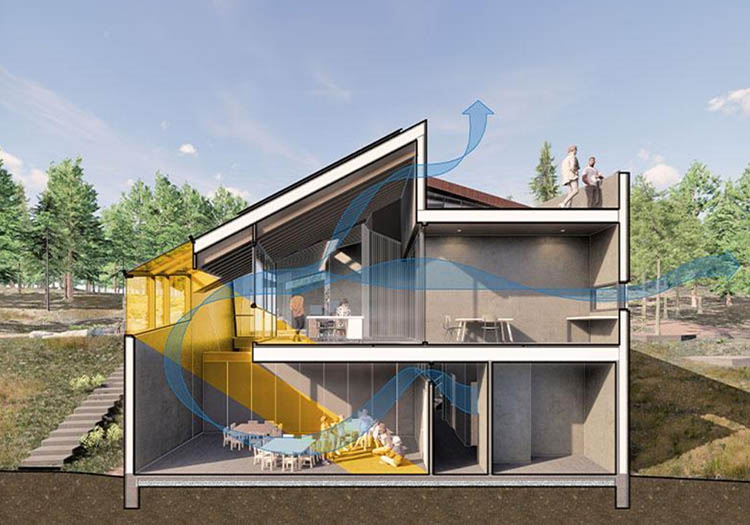
Natural ventilation remains one of the most effective methods of reducing home overheating in residential buildings.
Design features such as windows, vents, and louvres encourage air movement without relying on mechanical systems. Warm air can escape while cooler air enters the building, creating a natural flow that helps regulate indoor temperatures.
This passive approach reduces energy consumption and supports wider sustainability objectives. When incorporated into the early stages of a project, natural ventilation can deliver significant long-term benefits.
Mechanical Ventilation for Greater Control
In some buildings, natural ventilation alone may not provide sufficient cooling.
Highly insulated and airtight homes often require mechanical systems to manage home overheating and maintain comfortable indoor conditions. Mechanical Ventilation with Heat Recovery (MVHR) systems offer a controlled solution by continuously supplying fresh air while improving energy efficiency.
These systems not only help manage indoor temperatures but also improve air quality and recover heat that would otherwise be lost.
Designing Sustainable Homes for the Future
Effective ventilation is no longer an optional design feature. It is a fundamental element of creating healthier, more sustainable homes.
At Varming Consulting Engineers, we develop tailored mechanical and electrical solutions that enhance comfort, improve building performance, and support sustainability goals while reducing home overheating.
Contact Varming Consulting Engineers today to learn how our ventilation strategies can help optimise your next residential development.