
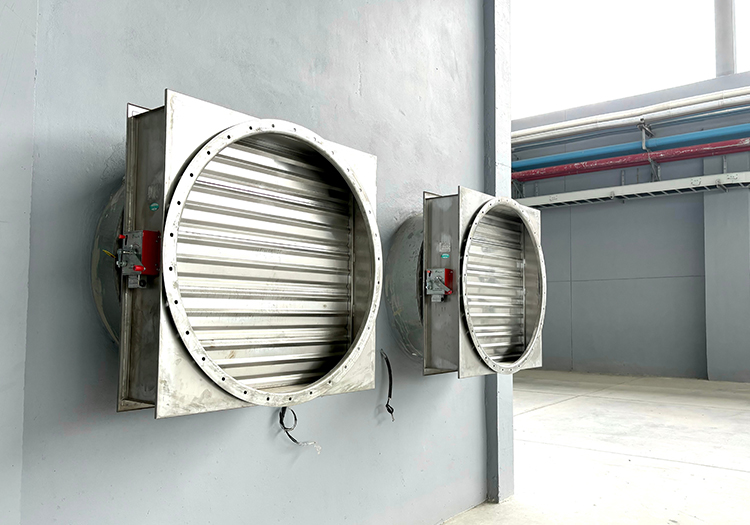
Fire and Smoke Dampers in Building Ventilation Systems
Fire and smoke dampers in building ventilation systems are essential components in fire safety engineering. They prevent the spread of fire and smoke through ductwork and help preserve the compartmentation strategy of a building. At Varming Consulting Engineers, our consulting engineers consider fire and smoke dampers as part of integrated M&E engineering and building services design to protect occupants and support building safety during a fire event.
The Importance of Fire and Smoke Dampers
Fire and smoke dampers help control the movement of fire and smoke within ventilation systems. Their purpose is to maintain compartmentation by restricting the passage of fire and smoke between different areas of a building.
According to CIBSE Guide E: Fire Safety Engineering (2019), walls, floors and ceilings are designed to resist fire for a defined period. Where ventilation ducts pass through these fire-resisting elements, suitable dampers are required to maintain the fire performance of the barrier. This is a key element of effective fire safety design.
Fire Damper Testing and Standards
To ensure reliable performance, manufacturers test fire dampers in accordance with BS EN 1366-2:2015. This standard assesses integrity, insulation and leakage performance under fire conditions.
During a fire event, the dampers close automatically when temperatures rise or when the fire detection system activates them. Once closed, they prevent flames and hot gases from travelling through ductwork and help maintain separation between building compartments.
For consulting engineers and design consultants involved in building services design, correct specification, installation and access for maintenance are essential to ensure reliable long-term performance.
Smoke Dampers in Building Services Design
However, smoke dampers perform a different function within building ventilation systems. Their role is to control smoke movement and support smoke extraction strategies during a fire.
Manufacturers test smoke control dampers in accordance with BS EN 1366-10, while BS EN 13501-4 provides the classification method and BS EN 12101-8 defines the performance requirements.
In practice, designers arrange smoke dampers so that they remain open along smoke extract routes while closing at branch ducts to prevent smoke spreading into adjoining spaces. As a result, smoke control systems can direct smoke away from occupied areas and assist evacuation procedures.
Integration with Building Management Systems
In addition, many modern building services designs integrate fire and smoke dampers with the Building Management System. This allows facilities teams to monitor damper status, identify faults and support routine testing procedures.
Regular inspection and maintenance remain essential to ensure dampers operate correctly and continue to comply with fire safety requirements throughout the life of the building.
Compliance with Building Regulations
In Ireland, fire safety systems must comply with the Building Regulations, with guidance provided in Technical Guidance Document B (Fire Safety).
Consulting engineers responsible for building services design must ensure that damper selection, installation and maintenance align with the building’s fire strategy and relevant regulatory guidance.
Conclusion
Fire and smoke dampers are vital for maintaining building safety and fire compartmentation. When correctly specified, installed and maintained, they reduce the risk of fire and smoke spreading through ventilation systems.
For professional advice on fire safety systems, M&E engineering and building services design, contact us.