Historic Engineering Challenges
Historic engineering challenges shaped how projects were designed and delivered during the 1980s. As buildings became larger and more complex, engineers faced increasing demands for comfort, performance and functionality. At the same time, design teams worked without many of the digital tools available today. Historic engineering challenges therefore required strong technical judgement, careful planning and close collaboration from the earliest project stages.
Projects such as the Dublin Castle Conference Centre, completed in 1984 for Ireland’s EU Presidency, and the Conrad International Hotel, Dublin, completed in 1989, illustrate the scale and complexity of projects delivered during this period. These developments arrived at a time when client expectations were increasing, building services systems were becoming more sophisticated and project requirements were changing rapidly.
Working Without Modern Design Tools
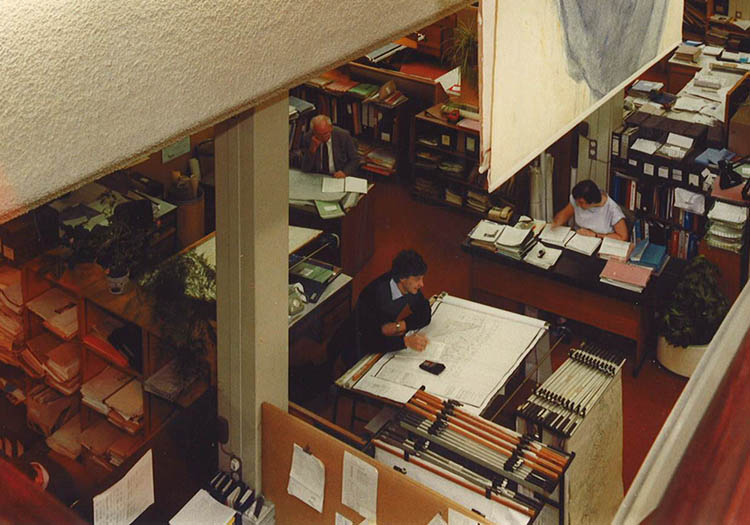
During the 1980s, M&E engineering design relied on manual calculations, two-dimensional drawings and written schedules. Engineers worked without Building Information Modelling (BIM), digital simulation software or automated coordination tools. Consequently, design teams relied heavily on technical expertise, practical experience and effective communication.
Furthermore, managing design changes proved more challenging than it does today. Potential conflicts between systems often emerged only as drawings developed. Engineers therefore needed to anticipate spatial, operational and maintenance requirements well in advance. As a result, careful planning became essential to successful project delivery.
Increasing Complexity in Building Design
Historic engineering challenges extended beyond the absence of digital tools. During the 1980s, buildings required increasingly complex mechanical and electrical systems. At the same time, architects often allocated limited space for building services infrastructure.
Engineers therefore needed to coordinate ductwork, pipework, electrical containment and plant equipment within increasingly constrained environments. In addition, clients expected buildings to offer greater flexibility, adaptability and operational performance. These requirements demanded careful integration between architectural, structural and building services disciplines.
Coordination and Integration Challenges
On major conference facilities, hotels and commercial developments, project coordination relied on meetings, marked-up drawings and direct communication. Shared digital platforms did not exist. Therefore, engineers carried significant responsibility for ensuring that systems aligned both spatially and functionally.
Moreover, communication between design team members required a disciplined and proactive approach. Engineers needed to identify potential issues early and resolve them efficiently. Consequently, successful projects depended upon strong coordination and clear communication throughout the design process.
Evolving Technology and Client Expectations
During this period, building services engineering continued to evolve rapidly. New technologies such as building management systems, communications infrastructure and security systems became increasingly important within commercial developments.
At the same time, clients expected buildings to remain adaptable for future needs. Therefore, engineers needed to design systems that could accommodate future changes while continuing to deliver reliable performance. This combination of emerging technology and evolving client requirements created additional engineering challenges throughout the decade.
What These Challenges Required of Engineers
Historic engineering challenges required more than technical knowledge alone. Engineers needed to balance performance, constructability and operational requirements while working within changing standards and project constraints.
Furthermore, they often made critical decisions using limited information when compared with modern design processes. As a result, professional judgement, accountability and collaboration became essential engineering skills. These qualities helped deliver successful projects across a wide range of sectors.
Lessons That Still Matter Today
Historic engineering challenges continue to provide valuable lessons for modern engineering practice. Technology, standards and design tools have advanced significantly since the 1980s. However, the importance of coordination, communication and sound engineering judgement remains unchanged.
As Varming Consulting Engineers celebrates its 80th anniversary, these projects provide an important reminder that successful engineering has always depended on more than technology alone. While tools continue to evolve, the principles of collaboration, technical excellence and careful planning remain central to effective building services engineering.
To learn more about Varming Consulting Engineers, explore our project portfolio and visit the Blogs & News section of our website for additional engineering insights and project stories.