
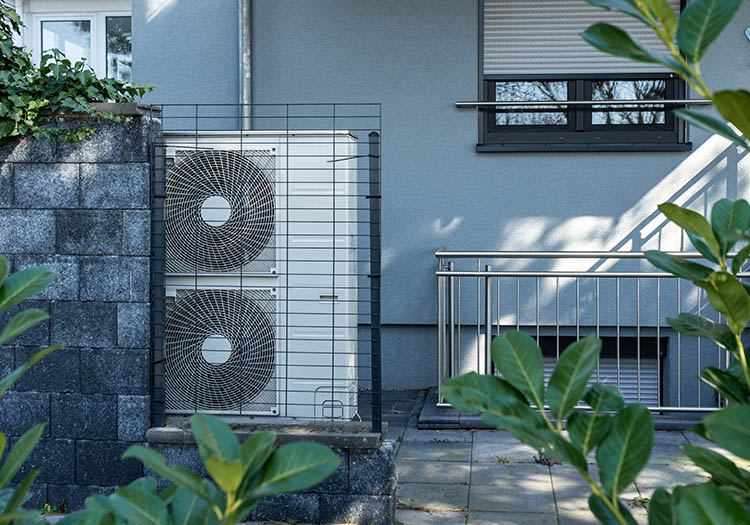
The Advantages of a Monobloc Air Source Heat Pump Installation
The Advantages of a Monobloc Air Source Heat Pump Installation
At Varming Consulting Engineers, we deliver advanced building services solutions for a variety of sectors. Today, we’ll explore The Advantages of a Monobloc Air Source Heat Pump (ASHP) Installation, highlighting the benefits for modern M&E engineering. If you’re considering upgrading your heating and cooling systems, contact our expert consulting engineers to discover how Monobloc air source heat pumps can improve your project.
Moving Away from Traditional Heating Systems
Historically, design consultants often recommended centralised heating systems that relied on fossil fuels such as gas or oil. However, as the demand for Net Zero carbon targets increases, these systems are being replaced by more sustainable solutions. Monobloc ASHPs use outdoor air as a renewable energy source, offering a more environmentally friendly alternative to traditional building services.
How Do Monobloc Air Source Heat Pumps Work?
A Monobloc air source heat pump utilises a refrigeration cycle to capture low-grade heat from outdoor air. It then converts this into useful heat for indoor spaces or hot water. When in cooling mode, the system works in reverse, expelling indoor heat to the outdoors. This makes Monobloc ASHPs particularly useful in M&E engineering, where decentralised systems are often preferred.
Unlike traditional systems, Monobloc ASHPs use multiple smaller units rather than a single large unit. This distributed system design allows for precise energy control, reducing operational costs and improving efficiency.
Key Benefits of Monobloc ASHPs
- Improved Energy Efficiency
Monobloc ASHPs often achieve higher Seasonal Coefficient of Performance (SCOP) ratings compared to traditional HVAC systems. Each unit operates independently, which allows energy use to be closely matched with demand. This improves overall system performance and reduces waste. - Load Modulation and Redundancy
One key advantage of a Monobloc system is the ability to adjust heating or cooling based on demand. Only the necessary units operate, which helps minimise energy consumption. In the rare event of a unit failure, other units compensate to maintain service, thus avoiding significant downtime. - Flexible Installation
Monobloc ASHPs offer flexible installation options. Traditional systems must be centrally located, often on the roof, to handle their size and weight. By contrast, Monobloc units can be distributed throughout a building, ensuring even weight distribution. This flexibility was shown in the Roscommon Hospice project, where we installed a Monobloc air source heat pump system that contributed to the building’s A3 energy rating. - Lower Maintenance Costs
Monobloc systems simplify maintenance. If one unit requires repair, it can be serviced without shutting down the entire system. This lowers maintenance costs and ensures that building services continue without disruption. - Integration with Renewable Energy
Monobloc air source heat pumps integrate seamlessly with other renewable energy systems, like solar PV. This enables buildings to move towards net-zero energy, as they can balance energy consumption with on-site renewable production.
Conclusion: A Smart Solution for M&E Engineering
Monobloc air source heat pumps offer an efficient and flexible solution for modern M&E engineering and building services. The Monobloc design reduces energy costs while also helping to meet sustainability goals. For design consultants aiming to lower a building’s carbon footprint, they provide an ideal solution.
To learn more about the benefits of a Monobloc air source heat pump installation, visit www.varming.ie or contact our expert consulting engineers on 01 4872300 to discuss your next project.